Gear selection
Camping stove types compared: canister, liquid, and wood
Published 2026-08-25
The best camp stove depends on the trip, not on a single feature. This guide compares the three common families—canister, liquid-fuel, and wood—across the factors that actually change the decision: fuel cost and availability, cold-weather performance, weight, and local fire rules.
Canister stoves: simple and convenient
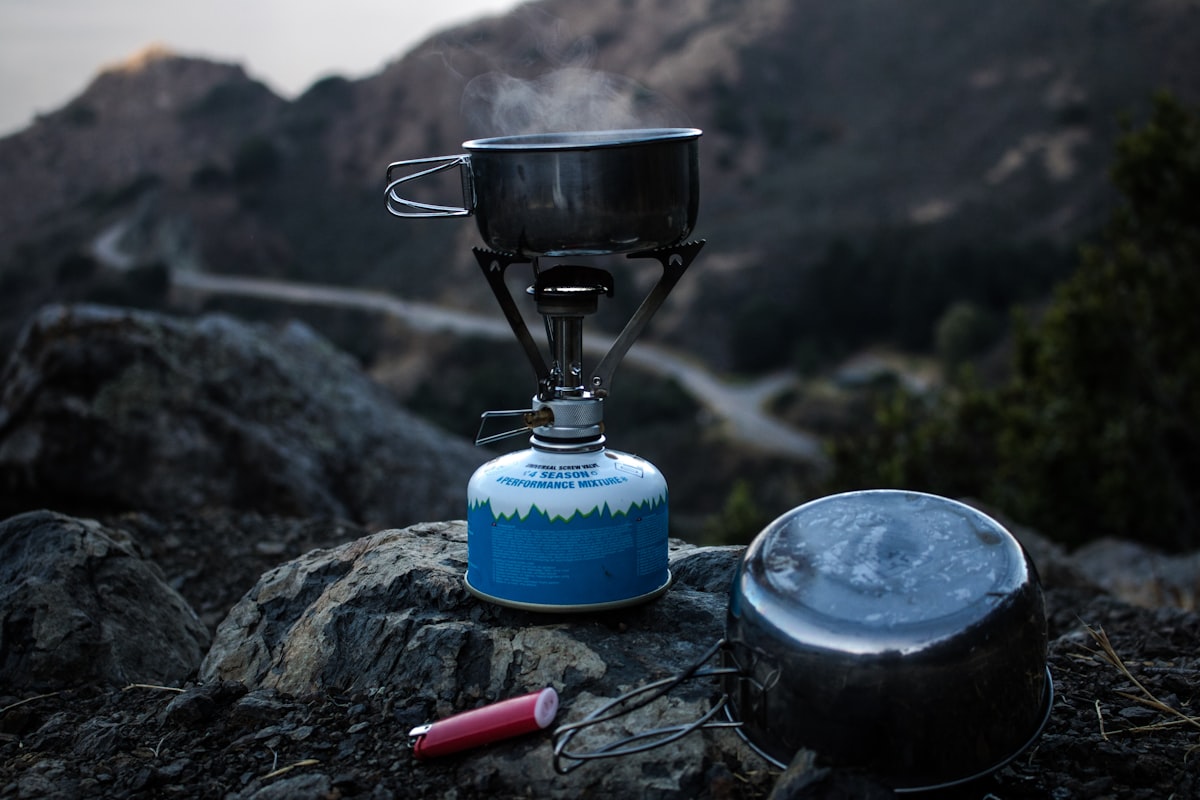
Canister stoves use pre-mixed isobutane-propane canisters and light with a push-button or match. They are compact, easy to operate, and the best default for most car and short backpacking trips in moderate weather.
Their main weakness is cold performance: canister pressure drops as the canister cools, so output fades in cold conditions unless you warm the canister or use an inverted-canister design. Check the manufacturer's stated operating conditions.
Confirm local rules before relying on a canister stove—some areas restrict or ban them during fire seasons or in specific zones.
Liquid-fuel stoves: predictable in cold
Liquid-fuel stoves burn white gas or similar fuels from a refillable bottle. They perform more predictably in cold and at altitude, and fuel is easy to carry in bulk—useful for longer trips.
The trade-offs are weight, a priming ritual, and more careful handling of liquid fuel. Read the manufacturer's instructions for priming, refueling, and maintenance before the trip.
Wood stoves: light but rule-dependent
Wood stoves need no fuel canister and are light, but they depend on dry wood, a fire-safe site, and local regulations. Many campgrounds restrict gathering wood or ban open flames entirely.
A wood stove is a planning decision, not a default. Confirm fire restrictions, wood-gathering rules, and the stove's compatibility with official fire policies before relying on it.
Record your selection factors—fuel cost, cold weather, weight, rules, group size—and compare models against them rather than against a single advertised feature.
- Compare stated fuel type, output, packed weight, and boil-time claims against manufacturer specs.
- Check campground and NPS, BLM, USFS, or state-park fire-restriction pages for the specific stove type.
- Include fuel purchase and transport in the cost comparison.
Choose the stove around the meal and the rules
List the meals you actually cook, the number of people, and whether you need to simmer or only boil water. Then check the fuel availability on your route and the manufacturer’s instructions for lighting, storage, and wind use.
Practice the complete setup on a stable, nonflammable surface before the trip. Pack a backup meal that needs no stove, especially when fire restrictions or cold temperatures could make cooking slower than expected.
Record the two specifications that decide this page’s choice, then compare them side by side.
For stoves, compare fuel availability, cold-weather behavior, boil control, ventilation needs, and lighting steps before you pack one.
Write the single condition that would make you choose the other option before buying.
For stoves, compare fuel availability, cold-weather behavior, boil control, ventilation needs, and local fire restrictions for the meals you plan to cook.
Field check
Compare a 5–16 oz stove weight, a 3–8 minute boil time for a liter, and a cold-weather cutoff near 20°F for canister performance. Confirm the manual for your model. Verify the current guidance ↗
Further reading
Sources to check for your place and date
More to explore
Related guides
How to choose a family tent without guessing
Explore How to choose a family tent without guessing with a focused checklist and local-rule checks before departure.
Gear selectionSleeping bag temperature ratings: what the number can and cannot tell you
Explore Sleeping bag temperature ratings: what the number can and cannot tell you with a focused checklist and local-rule checks before departure.
Gear selectionWhat to check before you buy a used tent
Explore What to check before you buy a used tent with a focused checklist and local-rule checks before departure.
A final check
A gear-specific final check
For stoves, verify fuel compatibility, pot-support dimensions, cold-weather limits, and the maker’s warranty on the exact model page.